
China and the BRICS Card in the Geostrategic Game Over AI

Concerns Among Experts in the U.S. and China
The concerns expressed in the West regarding the still-unknown potential of AI technologies and the risks we face in the absence of concrete and effective security policies are also shared by numerous high-profile Chinese scientists.
Among them is the country’s only Turing Award winner, Andrew Chi-Chih Yao (Yao Qizhi), who has warned about the gradual loss of control over models and the risk of erosion of human cognitive abilities. As early as 2020, during his opening address at the World Artificial Intelligence Conference (WAIC)—titled “New Directions in Artificial Intelligence Theory”—he introduced concepts related to superintelligence and the need to maintain human supremacy by mathematically constraining future systems. In 2024, he was one of four signatories—along with Stuart Russell, Yoshua Bengio, and Ya-Qin Zhang—of a statement calling for the establishment of an international authority to oversee AI.
The broader context also includes Xue Lan, a technology policy scholar at Tsinghua; Yi Zeng, a researcher at the Chinese Academy of Sciences; Zhang Ya-Qin, a professor at Tsinghua and AI expert; and Gao Wen, a computer scientist and director of the Peng Cheng Laboratory. While their concerns are not identical, they are nonetheless aligned on at least two issues: the uncontrolled or inappropriate use of technology and the cognitive risks to humans.
Overall, what is becoming increasingly clear is the need for a strategic assessment of the role and impact of AI. This assessment is taking shape symmetrically in Western countries and China, albeit with different foundations and perspectives.
The alarms raised by Big Tech—and, among them, by Anthropic with greater timeliness and vehemence—are countered by an apparently more open and proactive stance from the Beijing government. For example, during the daily press conference on September 14, 2026, Chinese Foreign Ministry spokesperson Guo Jiakun responded to a question from Reuters regarding the calls by Dario Amodei, Sam Altman, and Elon Musk to slow down the development of cutting-edge technologies. Guo stated that AI is a technology of fundamental importance to the well-being of humanity, called for its open and inclusive development for the benefit of all, and asserted that spreading fear and engaging in fierce competition will only hinder efforts toward robust global governance of AI.
The Challenge of Global AI Governance
Global governance has now become the central issue. Last July, the proposal was put forward within a few days of each other by both neuroscientist Demis Hassabis and President Xi Jinping.
The Nobel Prize winner in chemistry and co-founder of DeepMind has proposed the establishment of a U.S.-led international body, modeled after FINRA (Financial Industry Regulatory Authority), to set standards and evaluate cutting-edge AI models. Hassabis wrote on X that AGI (Artificial General Intelligence)—a system that exhibits all the cognitive capabilities of the brain—will be achieved in a few years, and he urges that the necessary measures be taken promptly to manage and secure a technology that will have an impact ten times greater than that of the Industrial Revolution, but at a speed ten times faster. The meaning of the verb “exhibit” remains to be clarified. It is worth noting that its usage covers an ambiguous range of actions, ranging from “showing”—as in displaying works of art or staging theatrical performances—to “testifying”—in the sense of providing evidence. In any case, the substance of these predictions remains unchanged.
The project calls for the creation of a board of directors with an independent majority, composed of Turing Award winners, qualified experts, and stakeholders from industry, government, and the open-source community. Participation in security tests addressing risks related to biological and nuclear threats, cybersecurity, transparency, and agentic deception would be voluntary.
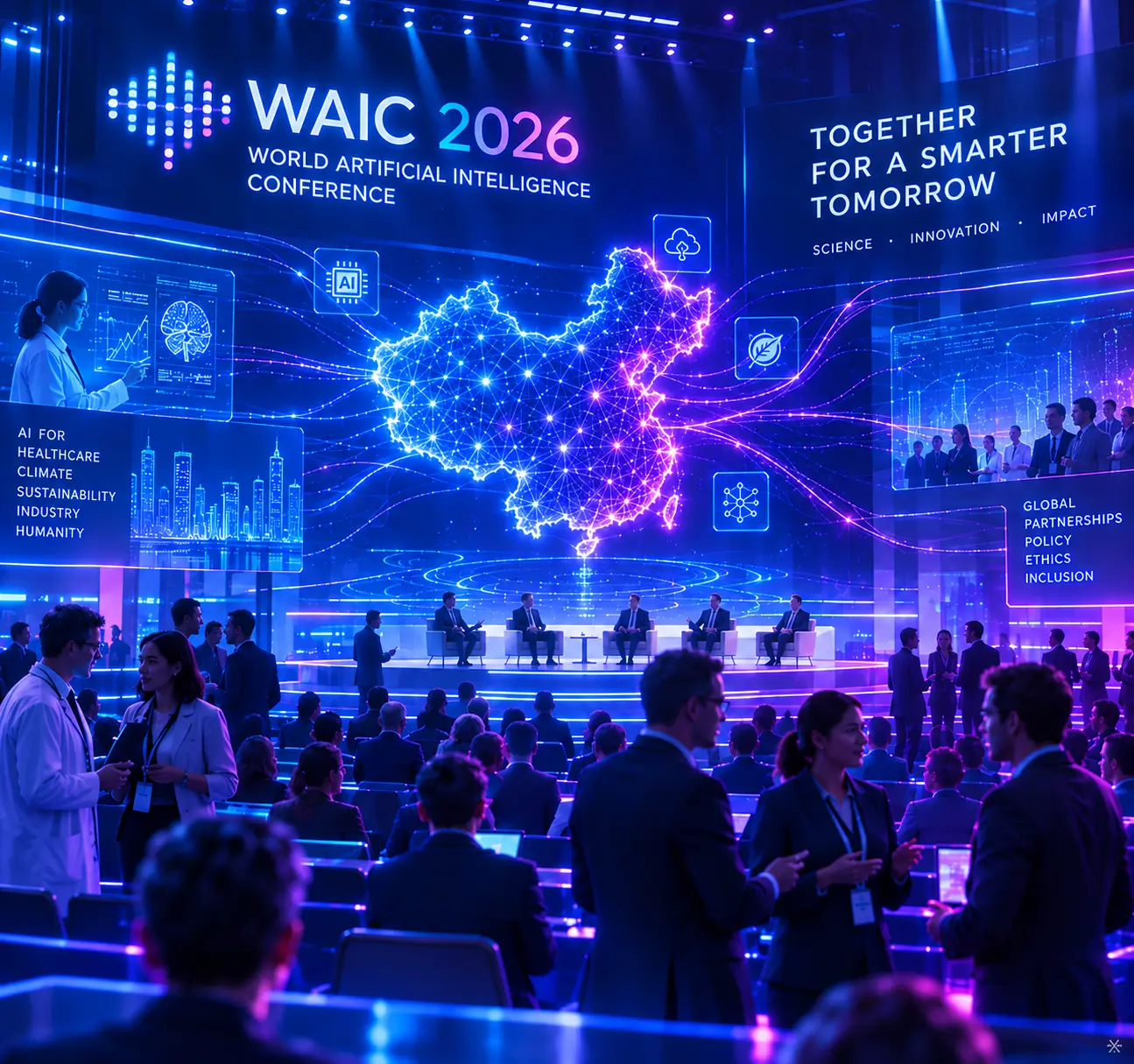
On July 17, 2026, at the opening of the World Conference on Artificial Intelligence in Shanghai, Xi Jinping delivered a speech titled “Joining Forces to Build a Fair and Just Global AI Governance System.” The president, arguing that AI development must promote the common good, remain under human control, and be regulated through international cooperation, outlined the proposal in four points: openness and cooperation, security and control, cultural inclusion, and, indeed, global governance. The stated aim is to coordinate strategies, rules, and technical standards, enhance the role of the UN, and help countries in the Global South bridge the digital divide.
Version 3.0 of the AI Security Governance Framework was presented at China Cybersecurity Week 2026, which opened on September 14 in Jinan (the capital of Shandong Province in western China). The event was organized by various government departments and organizations, including the Cyberspace , the Ministry of Industry and Information Technology, and the Ministry of Public Security. The Framework bears similarities to Hassabis’ proposal: to transform security management from isolated controls to continuous, risk-based oversight, without presenting itself as a mandatory legal standard. However, it has a broader scope, as it is not limited to frontier models.
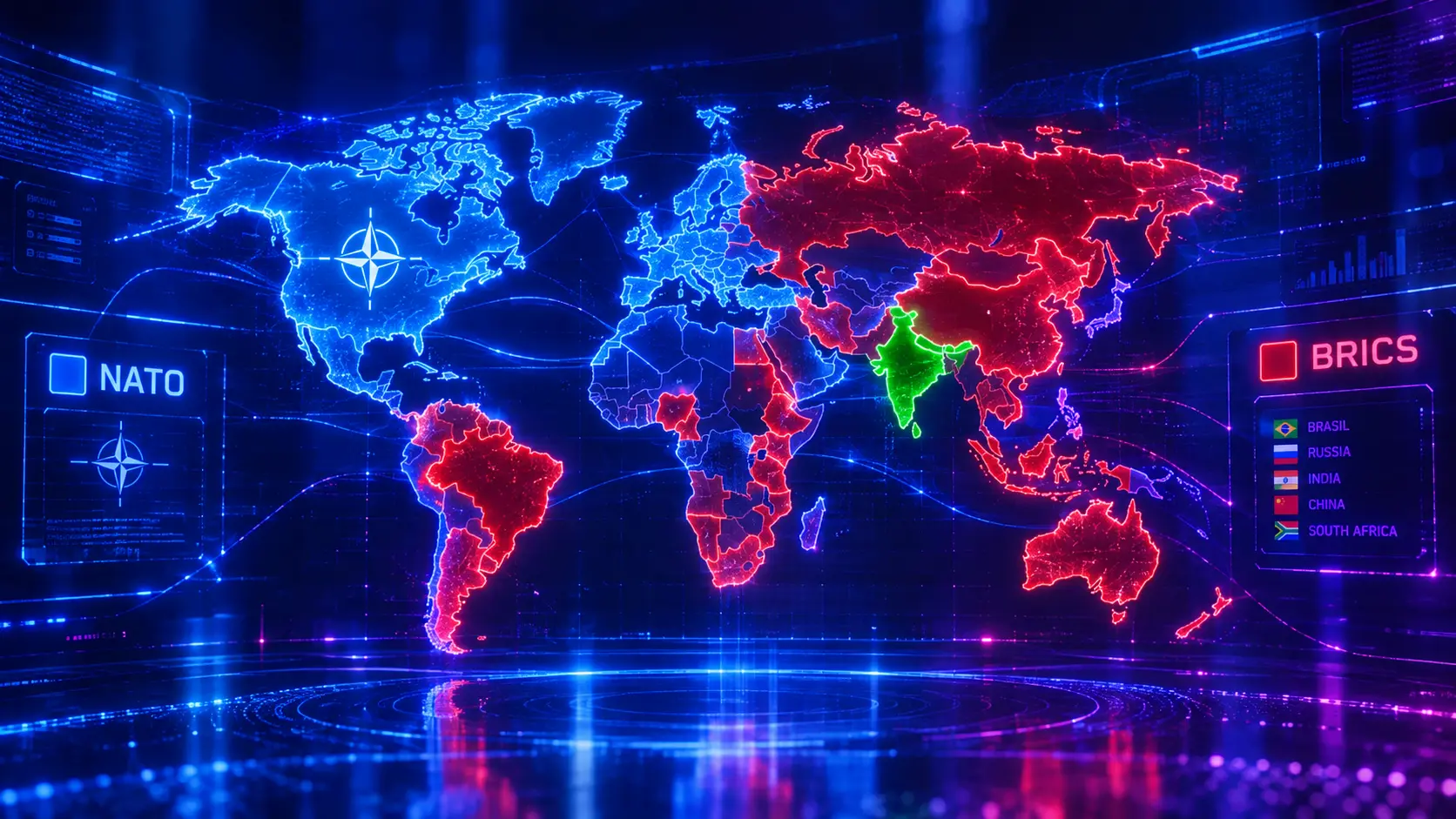
In any case, both proposals aim to drive a global strategy, which will play out in the interplay between the diverse NATO landscape and the ecosystem revolving around the BRICS countries—the outcome of which is by no means a foregone conclusion.
China, the BRICS, and an Uninvited Guest
Speaking at the 18th BRICS Summit in New Delhi (September 12, 2026), Xi Jinping confirmed that China will take a leading role in promoting collaboration and the development of artificial intelligence among developing countries. Furthermore, China is positioning itself to be a pioneer in creating an open-source AI community in this geopolitical region, by systematizing digital skills training, technology exchange, and industrial alignment.
On July 16, 2026—at the World Artificial Intelligence Conference (WAIC) in Shanghai—Algeria, Belarus, Brazil, Cambodia, Cameroon, China, Congo, Cuba, Ethiopia, Indonesia, Kazakhstan, Kenya, Kyrgyzstan, Laos, Lesotho, Malaysia, Mozambique, Myanmar, Nicaragua, Oman, Pakistan, Russia, Senegal, Serbia, South Africa, Tajikistan, Uzbekistan, Venezuela, and Zambia signed the founding agreement of the World Artificial Intelligence Cooperation Organization (WAICO), becoming its founding members. WAICO aims to promote international cooperation and global governance of AI, with a particular focus on supporting developing countries.
At present, for all signatories, this marks the launch of a project rather than active participation. Furthermore, and most importantly, the position of a key player like India remains to be assessed. In February 2026, India chose to join the U.S.-led Pax Silica coalition to safeguard its technological influence, particularly in relation to the semiconductor and chip industries, design, computing, reliable cloud services, and resilient supply chains.
The situation is extremely fluid, and gradual adjustments are expected in the coming months.
TS-Intelligence

The information reported is the result of the collection and analysis work carried out by the specialists of Telsy’s Threat Intelligence & Response team with the support of the TS-Intelligence platform, a proprietary, flexible, and customizable solution that provides organizations with a detailed risk landscape.
It is available as a web-based and full-API platform, designed to be integrated into the organization’s systems and defensive infrastructures, with the goal of enhancing protection against complex cyber threats.
The platform’s continuous research and analysis on threat actors and emerging online threats—whether APTs or cybercrime—produces a constant stream of exclusive intelligence, delivered in real time and structured into technical, strategic, and executive reports.
Discover more about our Cyber Threat Intelligence services.